


You want to fix missing teeth without waiting months for a new smile. Immediate load dental implants promise teeth in a single visit. That sounds simple, but you need to know how it really works.
Yes, in some cases you can get temporary teeth the same day your dentist places your implants, as long as your bone is strong and the implants stay stable.
Dentists place the implant posts and attach a temporary crown or bridge within hours or a few days. You leave the office with teeth while your jaw heals around the implants.
This option does not fit everyone. Your health, bone level, and bite force all matter. If you want to know whether same-day teeth make sense for you, keep going.
Key Takeaways
- You can receive temporary teeth the same day if your bone and implant stability allow it.
- Your health, bone strength, and bite play a key role in approval.
- Same-day implants offer faster results, but careful planning and follow-up care matter.
How Immediate Load Implants Work
Immediate load implants let you leave the office with teeth attached to your implants the same day.
Your dentist places the implant posts, checks their stability, and connects a temporary crown or bridge while your jawbone begins to heal.
The Immediate Loading Protocol Explained
Immediate load implants follow a strict medical plan. Your dentist must confirm that your jawbone can hold the implant post firmly at the time of placement.
This early stability is critical for osseointegration, which is the process where your bone bonds to the titanium implant.
Even though you receive teeth in a day, the bone still needs about 2–6 months to fully fuse with the implant.
Not everyone qualifies for one-day implants. Your dentist reviews 3D scans, gum health, bite force, and your medical history before moving forward.
If your bone feels too soft during surgery, your provider may switch to a delayed approach to protect long-term results.
Implant Placement and Temporary Crowns
Your dental implant procedure usually starts with removing any damaged teeth. During the same visit, your dentist performs dental implant surgery and places one or more implant posts into your jawbone.
Once the implants feel stable, your provider attaches a temporary crown or bridge. This temporary tooth stays slightly out of your bite so you do not put too much pressure on it while healing.
You walk out with functional teeth, but they are not your final set. The temporary crown protects the implant and supports your smile while osseointegration continues under the surface.
You will need to:
- Eat soft foods
- Avoid chewing directly on the implant
- Follow cleaning instructions closely
These steps lower the risk of implant movement during early healing.
Comparison With Traditional Dental Procedures
Traditional dental implants use a delayed loading method. After implant placement, you wait several months before your dentist attaches a crown.
With immediate load implants, your dentist connects a temporary tooth within 48–72 hours, and often the same day. Many clinics describe this as teeth in a day.
The key difference is timing, not healing. In both methods, osseointegration still takes months. Immediate loading simply allows you to keep your appearance and basic function during that period.
Delayed treatment may offer more protection if your bone quality is low or if you have medical risks.
Immediate loading offers convenience, but only when your implant placement achieves strong initial stability.
Who Is a Candidate for Same-Day Teeth?
You can get teeth the same day only if your mouth and overall health support fast healing and strong implant stability. Your dentist will look closely at your bone, gums, and medical history before making a decision.
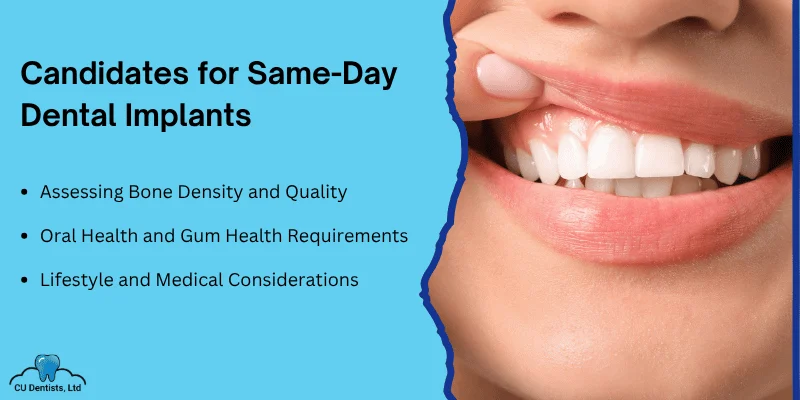
Assessing Bone Density and Quality
Your jawbone density and bone quality matter most for same-day implants. The implant must feel stable the moment your dentist places it.
Without strong initial stability, the implant can move, and that can stop proper healing.
Dentists use 3D scans to measure bone height, width, and density. If your bone is too soft or thin, you may need bone grafting first. In those cases, a delayed approach is often safer.
Dentists only attach teeth right away when they achieve enough stability and control biting forces.
You may still qualify if you lost a tooth recently and your bone has not shrunk. But long-term tooth loss often leads to lower bone density, which can limit your options.
Oral Health and Gum Health Requirements
You need healthy gums to support same-day teeth. Active gum disease increases the risk of infection and implant failure.
Your dentist will check for:
- Red, swollen, or bleeding gums
- Deep gum pockets
- Untreated decay
- Poor oral hygiene
If you have gum disease, you must treat it before implant surgery. Clean, healthy tissue helps your body heal and bond the implant to the bone.
Strong daily habits also matter. You should brush twice a day, floss daily, and follow all care instructions after surgery. Good oral hygiene lowers the risk of problems during the 2–6 month healing period.
Lifestyle and Medical Considerations
Your general health plays a key role in whether you are a good candidate for same-day implants. Dentists review your medical history, medications, and healing ability.
Ideal candidates often have:
- Controlled medical conditions
- No active infections
- Adequate jawbone density
- Healthy gums
Some health issues, such as uncontrolled diabetes or heavy smoking, can slow healing and raise the risk of implant failure. Smoking also reduces blood flow to the gums and bone.
You may also need to follow a soft-food diet and avoid chewing on the implant during early healing. Not everyone qualifies, and careful screening protects your long-term results.
Your dentist will weigh speed against safety and choose the option that gives you the most stable outcome.
Benefits and Drawbacks of Immediate Load Implants
Immediate load implants let you leave the office with teeth in place the same day. They offer fast results, but they also carry specific risks tied to healing, stability, and long-term success.
Advantages of Immediate Restoration
Immediate load implants, often called same-day implants or teeth in a day, give you a working smile right after surgery. You do not wait months with a gap or removable denture while the implant heals.
You can chew soft foods and speak more clearly the same day. This helps you return to normal routines faster.
The emotional impact of dental implant is significant. Many people also feel more confident because they avoid a visible missing tooth.
Some implant systems support this approach by using designs that improve early stability. When your dentist achieves strong initial stability, the implant can support a temporary crown right away.
Full-arch cases often use several implants with a temporary bridge placed the same day. This spreads pressure across multiple posts, which can improve support during early healing.
You may also reduce the total number of visits. That saves time and limits repeated surgical procedures.
Potential Risks and Implant Failure
Immediate loading places pressure on the implant before full osseointegration occurs. Osseointegration is the process where bone fuses to the implant surface.
This step is critical for long-term success.
If the implant moves too much during healing, implant failure can occur. Excess biting force, teeth grinding, or poor bone quality increase this risk.
Certain patient conditions make this approach less suitable. Low bone density, uncontrolled diabetes, and heavy smoking can affect healing.
You also face a small risk of infection or inflammation around the implant. If failure happens, your dentist removes the implant, allows healing, and may try again after several weeks.
Careful case selection lowers these risks. Your dentist checks bone volume, gum health, and bite force before recommending same-day implants.
Impact on Bone and Gum Tissue
When done correctly, immediate load implants can help preserve bone and gum tissue. The implant stimulates the jawbone, which may reduce bone loss after tooth removal.
Early placement can also support the natural shape of your gums. This matters most in the front of your mouth, where appearance is important.
Some experts note that immediate loading implants may help maintain bone and soft tissue when stability is strong at placement.
However, this benefit depends on proper planning and precise implant positioning.
If the implant lacks stability, added pressure can damage the healing bone. That may increase bone loss instead of preventing it.
You should follow a soft diet and strict hygiene during early healing. Your daily care plays a direct role in protecting both the implant and the surrounding gum tissue.
The Same-Day Implant Process: Step by Step
You can often receive implants and leave with temporary teeth in one visit. Your dentist plans each stage with digital imaging, careful surgery, and close follow-up to protect healing.
Consultation and Digital Imaging
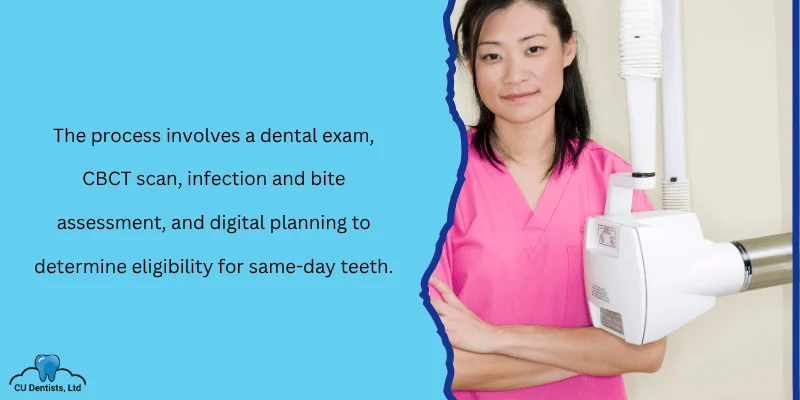
You start with a detailed exam from an implant dentist. They review your health history, medications, and any gum problems before moving forward.
Next, they take a CBCT scan, which is a 3D type of CT scan. This scan shows your bone height, width, and density. It also maps nerves and sinuses so your dentist can place each titanium post safely.
Your dentist checks for infection and measures bite pressure. Strong bone and good gum health help support immediate loading.
Using the CBCT images, your dentist plans the exact angle and depth of each implant. They also review the implant surface, which is designed to help bone attach during healing.
This planning step decides if you qualify for same-day teeth or need a delayed approach.
Implant Surgery and Temporary Restoration
On surgery day, your dentist numbs the area or uses sedation to keep you comfortable. They remove any damaged teeth if needed.
They then place each titanium post into the jawbone. The goal is strong initial stability. If the implant feels secure, your dentist can attach a temporary solution the same day.
For a full arch, you may receive a fixed temporary bridge or a reinforced temporary denture. For a single tooth, your dentist may place a temporary crown that stays slightly out of your bite to reduce pressure.
You leave with teeth that look natural, but they are not your final set. You must follow a soft diet and avoid chewing directly on the implants while the bone heals around the implant surface.
Final Restoration and Follow-Ups
Healing, called osseointegration, usually takes 2 to 6 months. Even with same-day teeth, bone still needs time to bond to the implants.
The page on immediate-load dental implants explains that same-day teeth are provisional while healing continues.
During this time, you attend follow-up visits. Your dentist checks gum health, bite balance, and implant stability.
Once healing is complete, your dentist replaces the temporary teeth with your final restoration. This may be a custom crown, bridge, or full-arch prosthesis made from strong materials like zirconia.
Your dentist adjusts your bite to spread pressure evenly. With good hygiene and regular checkups, your implants can function like natural teeth for many years.
Comparing Same-Day and Traditional Dental Implants
You can replace missing teeth in one visit or over several months. The right choice depends on your bone health, budget, and how fast you want results.
All-on-4 and Teeth in a Day vs. Multi-Stage Implants
With same day implants, your dentist places the implant and attaches a temporary tooth or bridge in one appointment.
Many offices call this teeth in a day or immediate load treatment. You walk out with fixed teeth instead of waiting months.
Options like All-on-4 and teeth-in-a-day vs traditional implants use four implants to support a full arch. This method often replaces dentures with a fixed bridge.
You get function and appearance right away, but you still need time to heal before getting the final prosthetic.
Dental implants follow a multi-stage process. Your dentist places the implant first, then waits three to six months for the bone to fuse to it.
After healing, they attach the abutment and crown.
Same-day treatment shortens the timeline. Traditional treatment spreads it out but may lower the risk of early implant movement in some cases.
Preparation Procedures: Bone Grafting and Sinus Lifts
Your bone quality plays a major role in choosing between these options. Immediate load implants need strong, stable bone at the time of surgery.
If you have bone loss, your dentist may suggest bone grafting or other bone augmentation before placing implants.
A graft builds up thin or weak areas so the implant can stay secure. This step often adds several months to treatment.
For upper back teeth, you may need a sinus lift. This procedure raises the sinus floor and adds bone so the implant has enough support.
Traditional implants commonly include these steps because they allow time for healing before the crown is placed.
Same-day implants may still require grafting, but many dentists limit immediate loading to cases with solid bone and good implant stability.
Long-Term Outcomes and Durability

Both methods show strong long-term results when placed correctly.
You can expect immediate-load implants to provide same-day function, while traditional implants require a healing period before the final crown.
Traditional implants have a long record of success. They allow the implant to fully bond with the jawbone before handling biting force.
Same day implants also perform well when your bone is dense and stable. However, you must follow diet limits and avoid heavy chewing during early healing.
Durability depends on factors such as:
- Your bone density
- Proper implant placement
- Good oral hygiene
- Regular dental visits
With either option, you protect your investment by keeping your gums healthy and avoiding smoking.
Cost, Aftercare, and Choosing an Implant Dentist
You need clear numbers, simple care steps, and a skilled provider before you commit to treatment. Cost, daily habits, and your choice of implant dentist all affect how well your new teeth last.
Factors Influencing Same-Day Dental Implants Cost
The national average for immediate load implants is about $3,255, but prices often range from $2,506 to $5,953. Your final bill depends on several direct factors.
Key cost drivers include:
- Number of implants placed
- Type of restoration (crown vs. bridge or full arch)
- Need for extractions or bone grafting
- Materials used in the implant systems
- Dentist’s training and location
For example, a single implant with a temporary crown costs less than a full-arch case that uses four to six implants. If you need bone grafting, you will pay more because it adds surgery time and materials.
Insurance may cover parts like extractions or the crown, but many plans treat implants as elective care. Always ask for a written treatment plan with itemized fees so you can see exactly what you are paying for.
Post-Procedure Care and Oral Hygiene
You protect your investment by following strict oral hygiene from day one. Right after surgery, you may notice swelling, mild bleeding, or soreness for a few days.
Your dentist will give you clear steps. These often include:
- Brush gently twice a day
- Use an antibacterial rinse if prescribed
- Avoid hard or sticky foods
- Eat soft foods for several days
Do not chew directly on the implant area until your dentist says it is safe. Even though you leave with teeth the same day, the bone still needs time to bond with the implant.
Smoking and poor cleaning habits raise the risk of implant failure. Keep all follow-up visits so your implant dentist can check healing and adjust your bite if needed.
Selecting the Right Implant Dentistry Provider
You should choose a provider who focuses on implant dentistry, not one who only places implants once in a while. Ask how many same-day cases they complete each year.
Look for these signs of a qualified implant dentist:
- Advanced training in implant systems
- Use of 3D imaging for planning
- Clear explanation of risks and benefits
- Before-and-after case examples
Some cases work better with traditional healing, while others suit immediate load treatment. A careful provider will review your bone quality, medical history, and bite before recommending same-day placement.
You deserve a dentist who explains costs, timelines, and aftercare in plain language. When you feel informed and not rushed, you are more likely to make a decision that fits your health and budget.
Frequently Asked Questions
Same-day implants can shorten your treatment timeline, but healing, comfort, cost, and risks still depend on your bone health and medical history.
Clear planning and proper case selection make a big difference in your results.
How does same-day tooth extraction and implant placement affect recovery time?
When your dentist removes a tooth and places an implant in the same visit, you combine two procedures into one healing period. This often means fewer appointments and less total downtime.
You still need time for the implant to bond with your bone. Bone healing, called osseointegration, usually takes 2 to 6 months, even if you leave with a temporary tooth the same day.
Same-day treatment does not speed up bone healing. It only reduces the gap between extraction and implant placement.
How painful is it to get a tooth extracted and an implant placed on the same day?
You should not feel pain during the procedure because your dentist uses local anesthesia or sedation. Most people report soreness and swelling for a few days after surgery.
Discomfort often feels similar to a routine tooth extraction. Your dentist may suggest over-the-counter or prescription pain medicine to control it.
If you follow instructions for rest, soft foods, and oral care, recovery is usually manageable.
What factors determine the cost of same-day implants, and what’s typically included?
Your cost depends on how many implants you need, the type of restoration, and whether you need extra procedures like bone grafting.
Imaging, surgical care, implant parts, and temporary teeth are often part of the total plan.
Some practices provide a bundled quote that covers evaluation, 3D scans, implant placement, provisional teeth, and final teeth.
Always ask what the fee includes so you understand if follow-up visits and your final crown or bridge are part of the price.
Who is a good candidate for getting a temporary tooth on the same day as implant surgery?
You may qualify if you have enough healthy bone to hold the implant firmly at placement. Dentists call this strong “primary stability.”
You also need healthy gums and no active infection at the site. Smoking, uncontrolled diabetes, or certain medications can lower your chances of approval.
Same-day temporary teeth are common in full-arch cases when several implants support one bridge.
What are the main risks or dangers associated with one-day dental implants?
The main risk is implant failure if the implant moves too much before it bonds to your bone. Chewing hard foods too soon can increase this risk.
Other risks include infection, swelling, bleeding, or nerve irritation. These risks exist with both immediate and delayed implants.
If your bone is soft or thin, your dentist may recommend waiting before placing the final tooth to lower the chance of problems.
How soon after a tooth extraction is it too late to place a dental implant?
You can place an implant immediately after extraction, within a few weeks, or several months later. After a few months, the bone may shrink, which can make placement harder.
If too much bone loss occurs, you may need a bone graft before implant surgery. Many dentists reassess the site around 8 to 12 weeks after extraction if they delay placement.
Early evaluation helps you avoid extra procedures and keeps your treatment plan on track.